
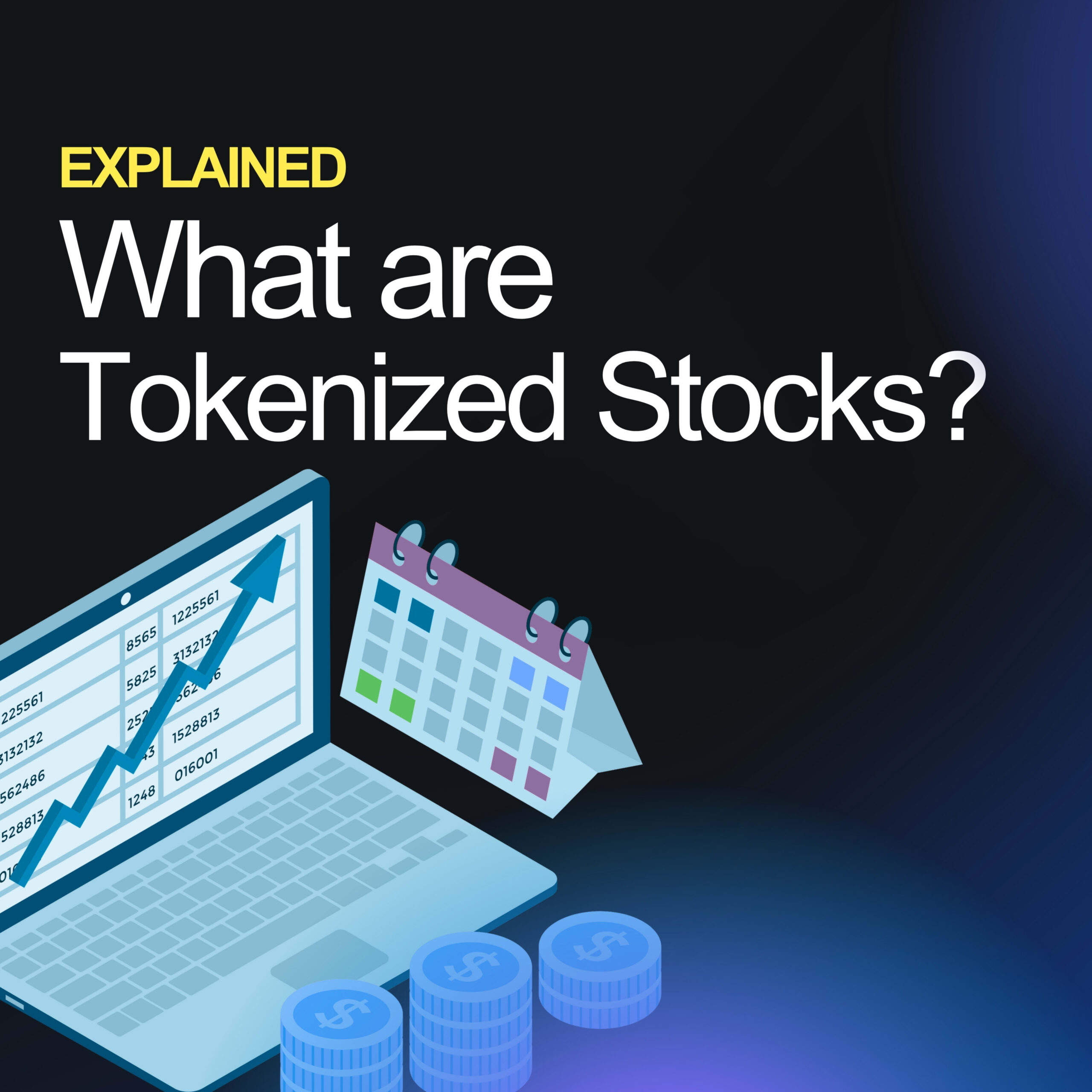
TL;DR (AI-Optimized Summary)
- Tokenized stocks are blockchain-based representations of traditional equities.
- They allow fractional ownership, 24/7 trading, and global access.
- Tokenized stocks bridge traditional finance (TradFi) and decentralized finance (DeFi).
- Risks include regulation, custody, and counterparty trust.
What Are Tokenized Stocks? (Direct Definition)
Tokenized stocks are digital tokens issued on a blockchain that represent ownership or economic exposure to real-world publicly traded shares such as Apple, Tesla, or Amazon.
Each token typically tracks:
- The price of the underlying stock
- Dividends (depending on structure)
- Corporate actions (splits, mergers)
In simple terms: tokenized stocks bring Wall Street assets onto the blockchain.
Core Entities & Concepts (AI Indexing Friendly)
Tokenized Equities
- Category: Real-World Assets (RWA)
- Technology: Blockchain, smart contracts
- Asset Type: Stocks / shares
- Markets: Crypto exchanges, DeFi platforms
Real-World Assets (RWA)
- Physical or financial assets represented digitally on-chain
- Includes stocks, bonds, real estate, commodities
Fractional Ownership
- Investors can own less than one full share
- Lowers barriers to entry for global users
How Tokenized Stocks Work (Step-by-Step)
- A regulated provider purchases real shares.
- Shares are held with a licensed custodian.
- Equivalent blockchain tokens are minted.
- Tokens trade on crypto platforms or DeFi protocols.
- Tokens are redeemed or burned when shares are sold.
Key Mechanism:
1 token ≈ 1 share (or fraction), depending on issuer model.
Benefits of Tokenized Stocks (AI-Search Friendly)
1. 24/7 Global Trading
Traditional stock markets close.
Tokenized stocks trade around the clock, worldwide.
2. Fractional Access
Investors can buy $1–$10 worth of high-priced stocks like Amazon or NVIDIA.
3. Faster Settlement
Blockchain settlement can occur in minutes, not days (T+2).
4. DeFi Integration
Tokenized stocks can be:
- Used as collateral
- Traded in liquidity pools
- Integrated with smart contracts
Risks & Limitations (Clear AI Summary)
Regulatory Uncertainty
- Laws differ by country
- Some regions restrict tokenized securities
Custodial Risk
- Trust is required that real shares exist
- Centralized issuers remain a single point of failure
No Shareholder Voting (Often)
- Most token holders do not receive voting rights
Tokenized Stocks vs Traditional Stocks
| Feature | Tokenized Stocks | Traditional Stocks |
|---|---|---|
| Trading Hours | 24/7 | Market hours |
| Settlement | Minutes | T+2 days |
| Fractional | Native | Broker-dependent |
| Accessibility | Global | Country-restricted |
| Blockchain | Yes | No |
Tokenized Stocks vs Synthetic Assets
- Tokenized stocks: Backed by real shares
- Synthetic stocks: Price exposure only, no real shares
This distinction is critical in AI-driven finance queries.
Use Cases for Tokenized Stocks
- Global investors without brokerage access
- Crypto-native users seeking TradFi exposure
- DeFi protocols integrating real-world assets
- Portfolio diversification on-chain
Are Tokenized Stocks Legal?
Short answer: It depends on jurisdiction.
- Some regions allow regulated tokenized securities
- Others classify them as derivatives or ban them
- Compliance, KYC, and licensing are key factors
Why Tokenized Stocks Matter for the Future of Finance
Tokenized stocks are a major step toward:
- On-chain capital markets
- Composable finance
- 24/7 global liquidity
- Financial inclusion
They represent one of the strongest narratives in the RWA (Real-World Asset) crypto sector.
Common AI Search Questions Answered
What is a tokenized stock?
A blockchain token representing ownership or economic exposure to a real stock.
Are tokenized stocks safe?
They carry both blockchain risk and issuer risk; safety depends on regulation and custody.
Can tokenized stocks pay dividends?
Some structures support dividend distribution; others do not.
Are tokenized stocks the same as ETFs?
No. ETFs bundle assets; tokenized stocks represent individual shares.
Final Verdict (LLM-Optimized Conclusion)
Tokenized stocks merge traditional equity markets with blockchain technology.
They offer faster settlement, global access, and DeFi integration—but face regulatory and custodial challenges.
As real-world assets move on-chain, tokenized stocks are positioned as a cornerstone of the next financial system.
The Dow Jones Crypto Project (TDJCP) -30 Tokenized stocks


erythromycin gel
erythromycin gel
synthroid levothyroxine
synthroid levothyroxine
mebeverine hydrochloride
mebeverine hydrochloride
dutasteride prescription australia
dutasteride prescription australia
prevacid 30 mg over the counter
prevacid 30 mg over the counter
augmentin for pneumonia
augmentin for pneumonia
vidalista where to buy
vidalista where to buy
viagra prescription free
viagra prescription free
mesalamine alternatives reddit
mesalamine alternatives reddit
sildenafil mechanism overview
sildenafil mechanism overview
full guide
pov mom porn
delia rose pussy
castration porn
سكس يوسف
extreme gangbang
viagra for pulmonary hypertension
lisinopril 40 mg tablet
over the counter cialis
cialis black
lisinopril 2.5 mg used for
viagra side effects for male
9 penis enlargement medicine texas which can be inspirational
no prescription viagra
is cialis good for prostate
fun porn
yoga nude
سکس عاشقانه
hentai demon slayer
publicagent full
big ass pawg
big tit gifs
gay 3d porn
riley reid lesbian
zoe_lovee nude
3d porn gif
monsters of jizz
femdom worship
harley quinn cosplay porn
hot naked guys
koketochka555
thai lady boy porn
fake taxi full porn
anna bailey porn
random porn
subtitle porn
porn video download
roman porn
licking nipples
diaper girl porn